Why Are Australian Property Prices Resilient? 75% of the Population Lives on 2.6% of the Land
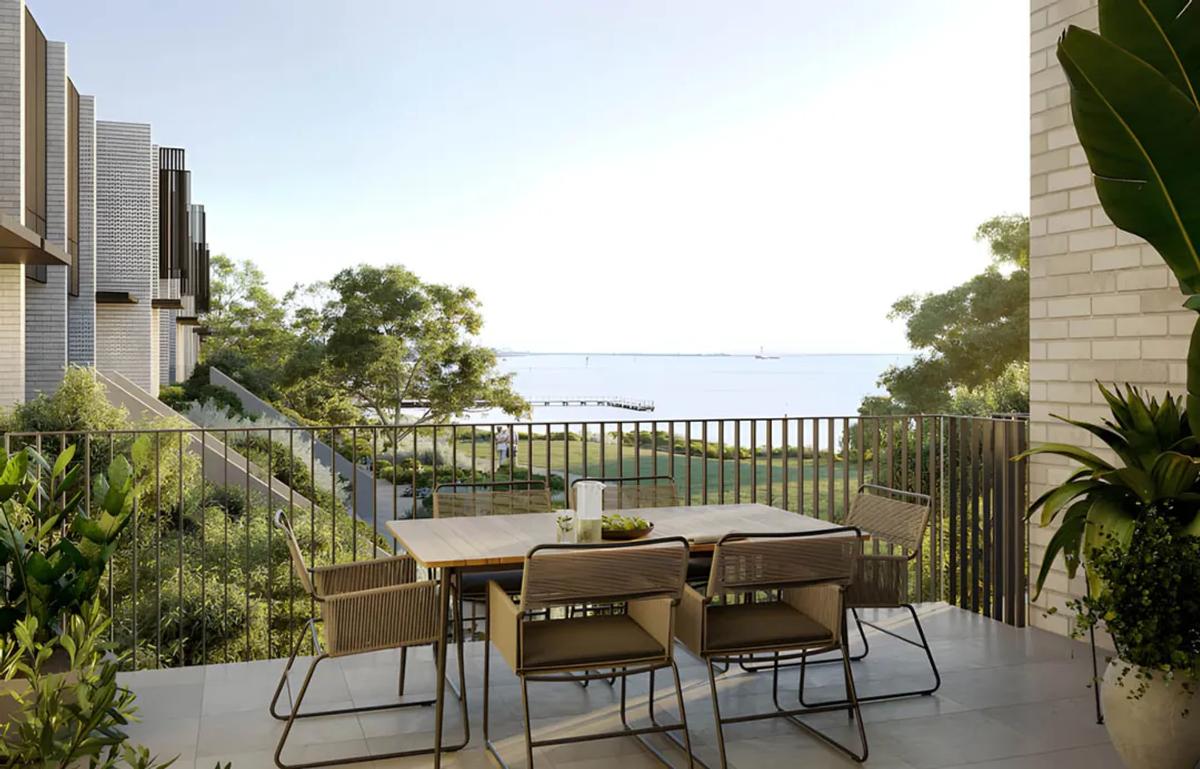
One reason for Australia’s persistently rising property prices is that most people choose to live in just eight capital cities. According to CoreLogic data, 75% of Australia’s population lives on only 2.6% of the country’s total land area. This characteristic gives Australian real estate relatively strong resilience during economic downturns and reliable capital growth, setting it apart from housing markets in other countries.
In a recent report, CoreLogic analyzed the impact of population density on housing values, revealing some surprising findings. For instance, Sydney, the nation’s most expensive housing market and most populous capital city, ranks only third in population density.
Melbourne has the highest population density at 521 residents per square kilometer, followed by Adelaide at 444, and Sydney at 440. Perth’s density is 360 per square kilometer, followed by the Australian Capital Territory (ACT) at 198, Brisbane at 171, Hobart at 150, and Darwin at 48.
These density figures reflect different rates of population growth. Major east-coast cities have built large numbers of apartments to accommodate growth, and the land areas of each city also vary considerably.
In Australia’s apartment market, lower long-term growth rates are common, particularly in suburbs with extensive existing or newly built apartment complexes. In areas with development potential, it is not uncommon for large numbers of new apartments to be built in a short time. While this benefits young buyers facing affordability challenges, it typically means lower capital growth in the short to medium term.
However, CoreLogic’s report shows that over the past 12 months, some high-density suburbs with large apartment complexes have seen price growth well above long-term averages. This likely reflects Australia’s chronic housing shortage, as housing supply has been tight over the past year and migration has reached record levels.
High-Density Suburb Price Growth Examples
In New South Wales, the standout example is Newtown in Sydney’s inner west. With a population density of 9,800 people per square kilometer, the median apartment price is close to AUD 840,000. Newtown apartments have averaged 3.5% annual growth over 10 years, but over the past 12 months, prices have surged by 9.2%.
In Victoria, the western side of Melbourne CBD has a population density approaching 20,000 per square kilometer, with a median apartment price near AUD 450,000. The 10-year average annual growth rate was -0.4%, but over the past 12 months, growth reached 7.6%.
Housing Supply Shortage Worsening
Australia’s long-term housing shortage has worsened during the pandemic. Lockdowns reduced building permits and completion rates. Post-pandemic, inflation has driven up construction material costs, and many projects have been delayed due to labor shortages. Coupled with bureaucratic red tape and NIMBY (Not In My Backyard) opposition, development approvals have further declined. Australian Bureau of Statistics data shows that only 3,771 apartments and medium-density dwellings were approved in February, the lowest level in 14 years.
On the completion side, only 12,116 apartments and medium-density properties were completed in the December quarter, the lowest level since the March quarter of 2022.
Population Density Trends Across Cities
CoreLogic’s report notes that population density is rising in every capital city, though in different ways. For example, Perth has seen the most population growth over the past 20 years, but its total population of 2.3 million is less than half that of Sydney or Melbourne.
Perth has more geographic space to expand outward and can build more new homes to accommodate growth, including on smaller lot sizes. As a result, Perth has the highest proportion of detached houses among today’s capital cities. This contrasts sharply with Sydney, which now has virtually no capacity to expand its urban boundaries, making upward development (apartments) the inevitable choice to accommodate ongoing population growth.