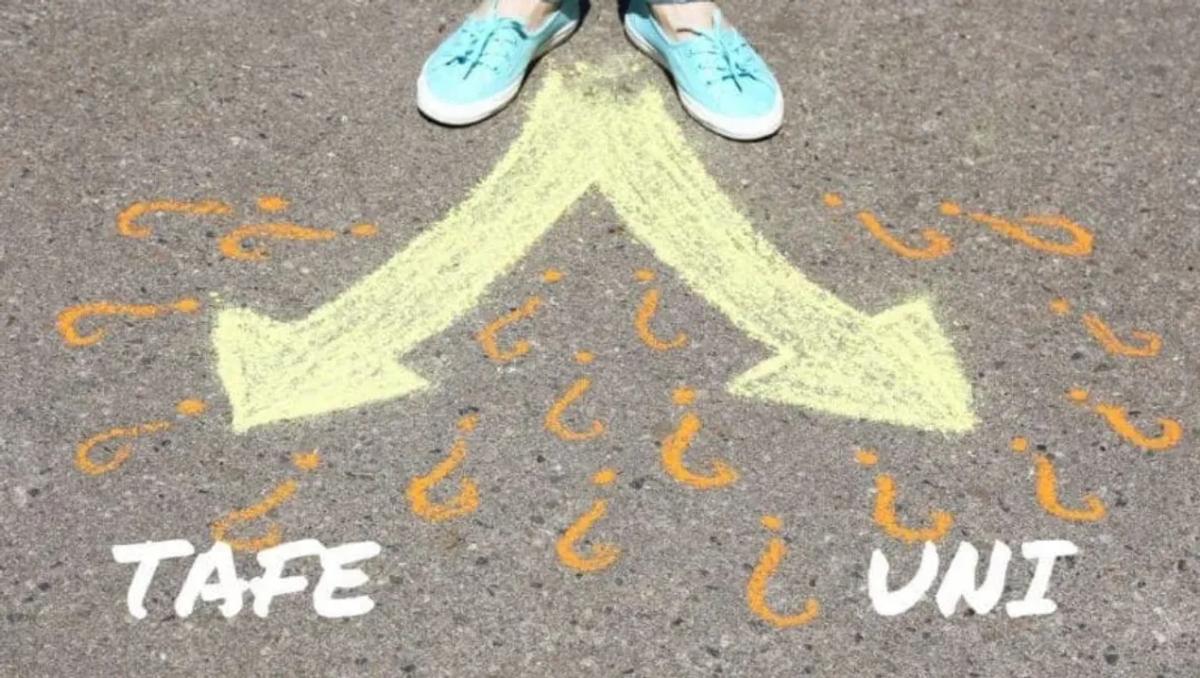
What is TAFE in Australia? How Does It Differ from University?
When studying abroad, most students choose to attend university — getting into a good school with a high ranking and graduating with a prestigious degree. However, beyond universities, Australia offers many TAFE courses, which are similar to vocational colleges or technical schools in China. Graduates from these institutions often find it easier to secure employment than university graduates, and their salaries are not low.

If you search online for information about studying in Australia, you will frequently come across the term “TAFE.” So what exactly is TAFE?
Basic Information about TAFE in Australia
TAFE has a history of over 100 years. It falls under the jurisdiction of each state’s Department of Education in Australia and is the largest higher education system in the Southern Hemisphere. It is the primary provider of national Vocational Education and Training (VET) and one of the most successful and distinctive education systems in the world.
TAFE (Technical and Further Education) is a nationally recognized form of vocational and technical education in Australia, delivered through government-established TAFE colleges. TAFE diplomas are issued by the Australian government and are equivalent to China’s higher vocational education diplomas.
TAFE offers advantages such as low tuition fees, strong employment prospects, and pathways to immigration. However, immigrating through TAFE typically requires completing 900 hours of supervised work placement, which some students find challenging. Therefore, it is important to choose the right course and institution to pass the TRA skills assessment for migration.
TAFE generally requires an IELTS score of 5.5 for admission. If your score is lower, you can enroll in an English language course first. Due to the high demand for TAFE programs, many courses require applications up to one year in advance, so early preparation is recommended.
If you want to come to Australia to learn a practical skill, TAFE is an excellent choice.
What Are the Differences Between TAFE and University?

Like universities, TAFE provides higher education, but there are two key factors you should carefully consider when planning your studies abroad.
In Australia’s education system, completing an undergraduate program earns you a bachelor’s degree, which ranks above TAFE qualifications in the educational hierarchy.
TAFE qualifications correspond to Certificates I, II, III, and IV, Diplomas, and Advanced Diplomas.
Additionally, the duration of study differs between universities and TAFE. A bachelor’s degree typically requires 3-4 years of university study, while TAFE courses take 1-3 years or longer.
Features of TAFE Courses
Courses are primarily designed based on local employment demand, meaning most programs align with occupations experiencing shortages.
The curriculum combines theoretical knowledge with practical training, with a strong emphasis on hands-on skills and operational competence.
TAFE tuition fees are generally lower, averaging around AUD 10,000 per year — approximately half the cost of undergraduate or postgraduate programs.
Language requirements for TAFE are relatively low, generally set at IELTS 5.5, with some programs requiring a minimum of 5.0 in listening and speaking.
Entry requirements are also accessible — a high school diploma or equivalent qualification is sufficient for admission.
Advantages of TAFE Courses
1. Strong Employment and Migration Prospects:
Most TAFE courses are designed around the employment needs of each state. Where there is a shortage of workers, corresponding programs are established. As a result, many courses lead to occupations in high demand, with clear pathways to skilled migration.
2. Shorter Duration and Lower Costs:
TAFE courses typically take 1-2 years, with less intensive schedules compared to undergraduate programs, allowing students to work part-time while studying. Average annual tuition is around AUD 10,000, whereas university programs cost at least AUD 30,000 per year.
3. Pathways to Higher Degrees with Accessible Entry:
Language requirements are relatively low at IELTS 5.5, with individual sub-scores no lower than 5.0 for some programs. The minimum academic requirement is equivalent to a high school diploma. TAFE also serves as a pathway to university — if your academic results are not sufficient for direct university entry, you can study a TAFE course first and then transfer, earning an additional qualification in the process.
Who Are TAFE Courses Suitable For?
Students who want to migrate: This is the primary reason for choosing TAFE. Since most courses are tailored to local skills shortages, graduates benefit from higher points for skills assessments and strong employment demand. TAFE is also ideal for students with strong practical abilities or existing vocational skills and experience.
Students with strong hands-on skills, or those who have already acquired relevant skills at vocational colleges in their home country, such as chefs, hairdressers, or welders. With lower tuition fees, total living expenses can be kept to around AUD 20,000 per year.
Students who wish to start with TAFE and later pursue a bachelor’s degree can do so through articulation agreements with partner universities. TAFE is also suitable for students whose English foundation is not yet strong — the minimum IELTS requirement is generally 5.5, with a 5.0 minimum for English language pathway programs.
Students with average academic records or qualifications. Most programs accept applicants with a high school diploma or equivalent. Those seeking more specialized training can choose pathway programs into fields such as accounting or information technology.
Recommended TAFE Migration Courses
Most vocational migration courses have a two-year duration, leading to a Diploma qualification. On Australia’s Skilled Occupation List, occupations such as accounting, IT, nursing, commercial cookery, early childhood education, automotive repair, electrical work, and carpentry are all listed. Major TAFE colleges across Australia offer relevant training programs and actively enroll eligible international students to meet market demand.
Recommended TAFE Certificate and Diploma Courses
1. Certificate III in Individual Support (Ageing) + Certificate IV in Ageing Support + Diploma of Community Services — Aged Care
2. Certificate III in Carpentry — Carpentry
3. Certificate III in Light Vehicle Mechanical Technology + Certificate IV in Automotive Mechanical Diagnosis — Automotive
4. Associate Degree in Civil Engineering — Civil Engineering
5. Certificate III in Cabinet Making - Marine Craft — Marine Cabinet Making
6. Advanced Diploma of Electronics and Communications Engineering — Electronics and Communications
7. Certificate III in Commercial Cookery + Certificate IV in Kitchen Management + Diploma of Hospitality Management — Commercial Cookery
Recommended TAFE Bachelor’s Degree Courses
1. Bachelor of Early Childhood Education and Care (Birth-5) — Early Childhood Education
2. Bachelor of Property Valuation — Property Valuation
3. Bachelor of Applied Commerce — Applied Commerce (Accounting or Financial Planning)
4. Bachelor of Information Technology (Cyber & Network Security or Data Engineering) — Information Technology
5. Bachelor of Fashion Design — Fashion Design
6. Bachelor of 3D Art and Animation — 3D Art and Animation
7. Bachelor of Interior Design — Interior Design
TAFE Institution Links by State
NSW: https://www.tafecourses.com.au/courses/new-south-wales/
VIC: https://www.tafecourses.com.au/courses/victoria/
QLD: https://www.tafecourses.com.au/courses/queensland/
WA: https://www.tafecourses.com.au/courses/western-australia/
SA: https://www.tafecourses.com.au/courses/south-australia/
NT: https://www.tafecourses.com.au/courses/northern-territory/
TAS: https://www.tafecourses.com.au/courses/tasmania/